

Canada Increases Flexibility for Refugees Facing Exit Barriers
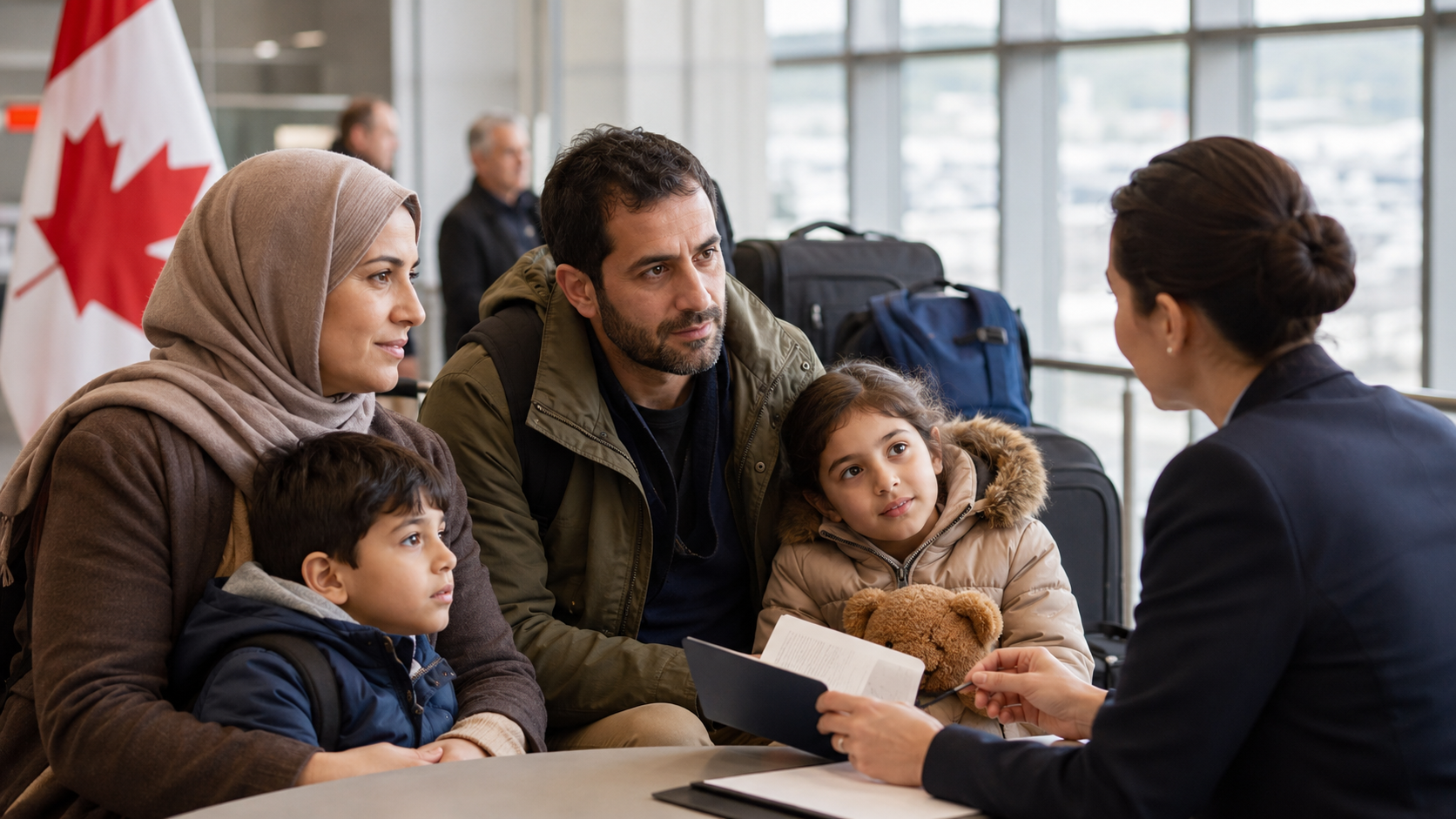
Canada has
introduced more flexibility for refugees who are facing difficulties leaving
their host country.
New
instructions from Immigration, Refugees and Citizenship Canada (IRCC) confirm
that refugees applying for resettlement to Canada are not required to provide
an exit permit or proof of legal status in their host country for their
permanent residence application to be processed.
This update is
important for many refugees who are living in countries where leaving may be
difficult due to legal, financial, or administrative barriers.
What Has
IRCC Clarified?
Many refugees
applying for resettlement to Canada are living in host countries that require
an exit permit before they can leave. In some cases, refugees are unable to get
this permit because of reasons beyond their control.
These reasons
may include:
- Lack of legal status in the host
country
- High registration or permit fees
- Administrative barriers
- Delays or refusal by local
authorities
IRCC has now
clarified that an exit permit is not required under the Immigration and Refugee
Protection Act to issue a permanent residence visa.
This means that
IRCC officers can continue processing the refugee resettlement application even
if the applicant cannot provide an exit permit.
Can an
Application Be Refused for Not Having an Exit Permit?
No. If the
applicant meets the requirements of the resettlement program and is not
inadmissible to Canada, the application should not be refused only because the
person cannot obtain an exit permit.
IRCC officers
may approve the application and issue the permanent residence visa if all other
requirements are met.
What Happens
If the Applicant Cannot Leave the Host Country?
If a refugee
cannot leave the host country because of exit barriers, IRCC guidance provides
three possible options.
1.
Withdrawal of the Application
The applicant
may choose to withdraw the application.
However, IRCC
cannot withdraw the application on its own. Only the applicant or their
authorized representative can request withdrawal.
2. File
Placed on Hold
If the officer
believes the applicant’s situation may improve soon, the file may be placed on
hold for a specific period.
Usually, this
hold may be for up to six months. The hold cannot continue indefinitely because
IRCC has a duty to process applications within a reasonable time.
Applicants
should also note that medical exams may expire during this period and may need
to be completed again before processing continues.
3. Final
Decision and PR Visa Issuance
If the
applicant meets all program requirements, the officer may approve the
application and issue the permanent residence visa.
The applicant
must then leave the host country and travel to Canada before the visa expires.
If the
applicant cannot leave before the visa expiry date, the file may be closed
internally, and a new application may be required.
What If
Family Members Cannot Leave?
In exceptional
situations, such as where there is an immediate threat to life or physical
safety, the principal applicant may choose to proceed without certain
dependents who cannot obtain an exit permit.
In such cases,
those dependents may be changed from “accompanying” to “non-accompanying.”
This allows the
principal applicant and other eligible family members to travel to Canada
without further delay. However, it also means that some family members may have
to remain behind.
Can Family
Members Join Later?
Family
reunification may be possible later through other immigration pathways.
These may
include:
- One-Year Window provision
- Family Class sponsorship
The One-Year
Window provision allows certain family members who were declared in the
original refugee resettlement application to be processed later. This may
include a spouse, common-law partner, or dependent children.
The request
must be submitted within one year after the principal applicant arrives in
Canada as a permanent resident.
However,
approval is not guaranteed. Family members must still meet the requirements of
the program at the time of application.
Final
Thoughts
This new IRCC
guidance gives more flexibility to refugees who are unable to obtain exit
permits or prove legal status in their host country.
The update
confirms that these barriers should not automatically prevent an eligible
refugee from receiving a permanent residence visa for Canada.
However,
refugees and their families should carefully understand the consequences of
each option, especially when dependents are unable to travel at the same time.
For refugee
resettlement and family reunification matters, it is important to seek proper
guidance before making any decision.